CABSAT 2026 Recap: What We Learned About the CDN Landscape in MENA
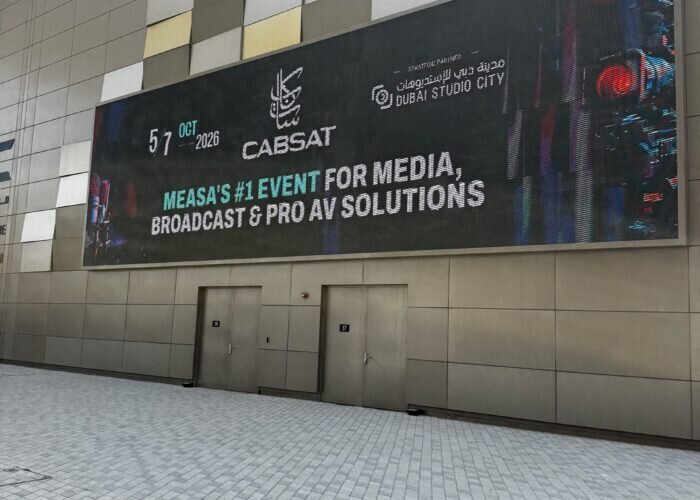
CABSAT 2026 brought the broadcast and media technology community back to Dubai this October. For Medianova, this was more than a conference stop. With twenty years of infrastructure across the MENA region, CABSAT is where we meet the people we build for: broadcasters, OTT platforms, media companies, and the engineering teams behind them.
This year felt different. The conversations were sharper, the questions more direct, and the overall mood told a story that is worth sharing.
Here is our recap of what stood out.
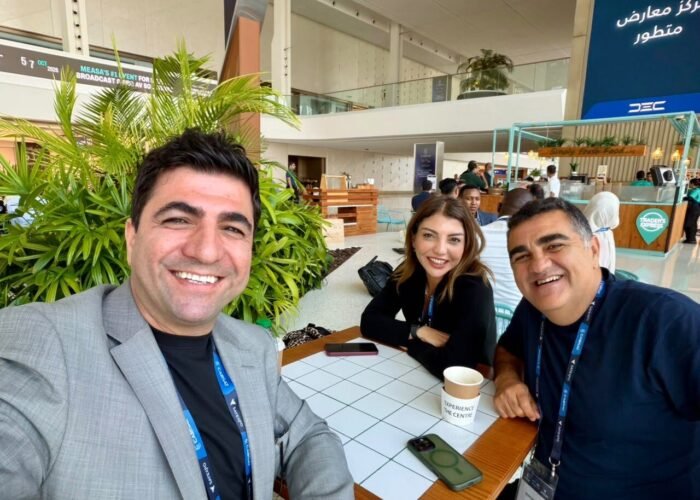
The Medianova Team at CABSAT 2026
Our team was on-site throughout the event, meeting with customers, partners, and media technology leaders from across the GCC and broader MENA region. Whether it was a deep technical conversation about edge caching or a quick hello at the booth, we genuinely value these face-to-face moments. They tell us things that dashboards and support tickets never will.
What We Heard on the Floor
The first thing that stood out was the shift in buyer sentiment. Tier-1 broadcasters and OTT platforms are not pulling back from content delivery. Traffic is growing, audiences are expanding, and the demand for low-latency, high-quality delivery across the region is as strong as ever.
But the way buyers are thinking about their infrastructure partners has changed.
Conversations kept circling back to the same themes: cost predictability, vendor commitment to the region, and whether their current CDN provider is actually investing in local edge capacity or just routing traffic through on the way to somewhere else. Media companies are asking harder questions about what they are really paying for.
The Pullback Nobody Expected
One of the most talked-about dynamics at CABSAT was the visible reduction in commitment from several global CDN players and hyperscalers in the MENA region. Some are scaling down local teams. Others have deprioritized PoP expansion across the GCC. A few have shifted focus back toward higher-margin Western markets entirely.
There is also a broader capital allocation shift happening across the industry. Major CDN providers are redirecting investment toward AI infrastructure and inference workloads. That means fewer dollars going into pure content delivery capacity, especially in regions where the return on infrastructure investment takes longer to materialize. For MENA, the effect is compounding: global vendors are not just pulling back operationally, they are financially reprioritizing away from the core delivery business that regional media companies depend on.
The reasons behind the pullback vary: co-location costs, regulatory complexity, operational friction, shifting global priorities, and now the gravitational pull of AI spend. But the result is the same. There is a growing gap between what regional media companies need and what global vendors are willing to commit to in this geography.
This came up repeatedly in our conversations with broadcasters and platform engineers. Rising latency at GCC edge nodes. Degraded cache hit ratios in markets that used to perform well. The pattern was consistent enough to be more than anecdotal.



The Opportunity Behind the Pullback
When global vendors pull back, demand does not disappear. It creates a vacuum, and that vacuum is being filled by regional infrastructure providers who have spent years building deep, committed edge capacity in MENA and EMEA.
We also noticed a parallel trend at the event: sovereign-backed technology entities and cross-border capital from East Asia and APAC are actively exploring this whitespace. They see what the retreating vendors are leaving behind and are looking for local infrastructure partners to build on.
For Medianova, this is not a new opportunity. It is a confirmation of the direction we have been building toward for two decades.
The Technical Problem Hiding in Plain Sight
Beyond the market dynamics, one specific technical challenge came up again and again in conversations at CABSAT, and it is something I wrote about on LinkedIn earlier this week.
Most CDN architectures in the region run under-provisioned cache tiers at their MENA edge nodes. The combination of expensive co-location, limited NVMe/SSD allocation, and the volume of unique content assets means that local cache capacity is often far smaller than it needs to be.
For static content, this means extra origin fetches. Manageable, but not ideal.
For image optimization, it is far worse.
Modern CDN platforms offer on-the-fly image transformation: resizing, format conversion to WebP or AVIF, responsive compression. When a transformed image is served from cache, the cost is near zero. But when that image gets evicted and a user requests it again, the entire transformation pipeline fires again. The IO engine re-fetches the original from origin, re-processes it, and re-serves it.
Because image optimization is billed per transformation, content owners end up paying two to three times for the exact same asset, over and over again. What looks like a bandwidth optimization quickly becomes a compounding operational cost spike, all because the edge cache was never large enough to hold the results.
If you are running dynamic media workloads in the region, audit your edge cache hit ratios against your transformation volumes. The numbers might surprise you.
What This Means for Media Brands Heading into 2027
CABSAT 2026 confirmed what we have been seeing in our own customer conversations for months. The market is not shrinking. It is realigning around providers who are genuinely committed to regional infrastructure.
For media companies evaluating their CDN strategy, the questions worth asking are straightforward:
- Where is your provider’s nearest edge node to your audience, and how much cache capacity does it actually have?
- When your optimized images get evicted, how often is your IO engine reprocessing the same assets?
- Is your provider expanding their MENA footprint, or quietly consolidating it?
The answers will tell you more about your future delivery costs than any sales presentation.
Looking Ahead
CABSAT remains one of the most important events on our calendar. It is where we hear directly from the media companies, broadcasters, and platform teams we serve across the region.
This year’s message was clear: the companies that win in MENA content delivery will not be the biggest global names. They will be the ones that showed up, built the infrastructure, and stayed.
We are already looking forward to CABSAT in May, 2027.
If you were there and we didn’t get a chance to connect, or if you couldn’t make it this year, we would love to continue the conversation. Book a time with our team here: Meet with Medianova
Media brands and broadcasters who want to understand how deep edge caching and regional infrastructure can change their cost structure: reach out to our team or visit medianova.com.